SOFTWARE ENGINEER · FULL STACK · FRONTEND · DESIGN

I build full stack applications with particular care for frontend architecture, interface design and accessibility.

ABSTRACTSoftware engineer working across the full stack, with frontend architecture, interface design and accessibility as my strongest area. My current work is full stack application development in TypeScript, React and Next.js. I build to WCAG guidance, design application architecture and data models across PostgreSQL, MySQL and MongoDB, containerize with Docker, and own features end to end, from specification through delivery. Before engineering I spent seven years as a Registered Behavior Technician delivering ABA therapy and implementing AAC systems for nonverbal children. That training in careful observation, data collection and systematic problem-solving carries into how I build software and design for the people who use it.

Degree
B.A. Computer Science, CU Denver, 2026
Work
Remote
Code
github.com/elijahsylar
Profile
LinkedIn

1Work

1.1 · CURRENT ROLE · MAY 2026 TO PRESENT

Software Application Development Engineer

Full stack application development, spanning data modeling, a server-rendered React interface, automated testing, CI/CD and infrastructure as code. With the same team since May 2026: intern, then contract, then full time from October 2026. I own features end to end across the stack.

TypeScript · React 19 · Next.js 16 · Node · Vitest · Azure (Cosmos DB, Entra ID, Container Apps) · GitHub Actions · Azure DevOps · Terraform
1.2 · INDEPENDENT PROJECT · SINCE MAY 2025

Aurora

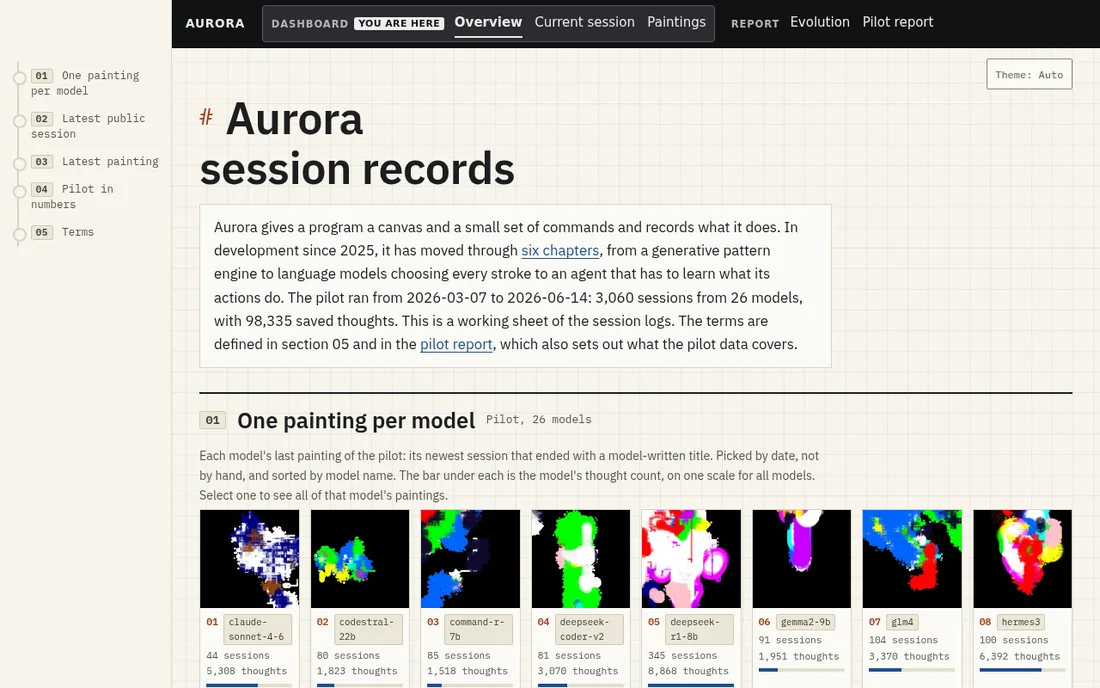
Aurora is an independent project that gives open-weight language models a canvas and a small command set, runs long unattended sessions, and records what they produce. The engineering covers a session runner with a constrained command interface, a logging pipeline and a web dashboard.

Pilot: 3,060 sessions from 26 models · 7 March to 14 June 2026

The Aurora dashboard overview page. A summary paragraph gives the pilot dates, 3,060 sessions from 26 models. Below it, a row of cards shows one painting per model, each with the model name and its session and thought counts.
The public dashboard, captured 17 November 2026.

1.3 · SOLE ENGINEER · PAUSED

LumpyLP

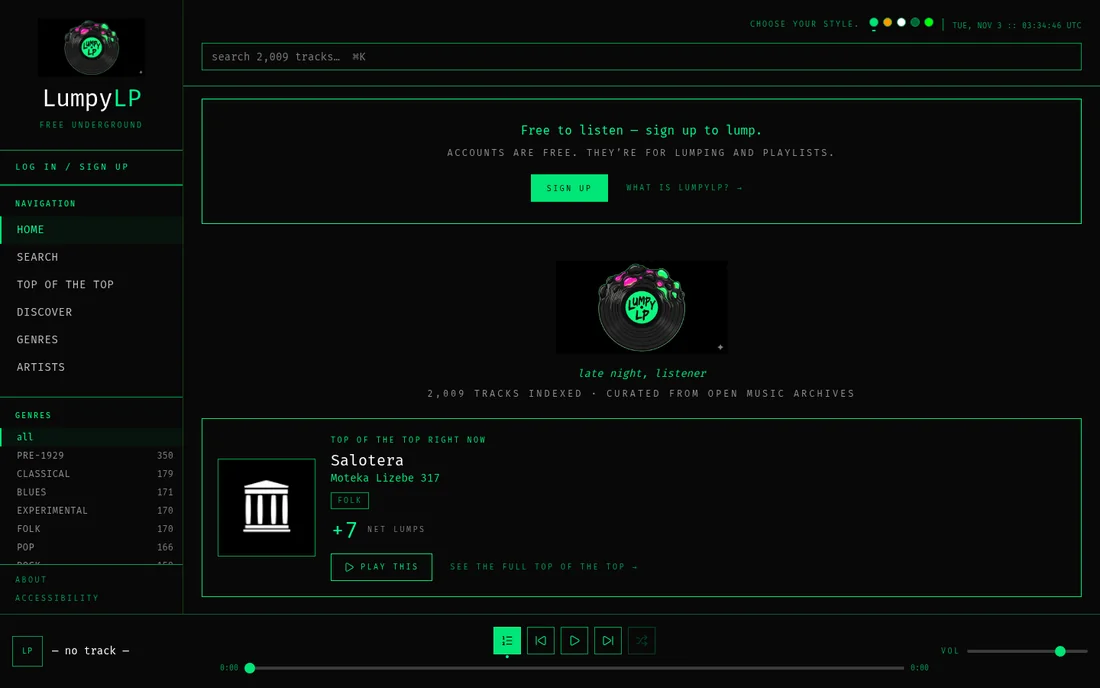
LumpyLP is a community-ranked catalog of music that is free to stream: Creative Commons and public-domain recordings, recordings streamed under platform terms (Audius), and live recordings shared under band taping policies. At the August 2026 snapshot the catalog held 645,161 tracks. There are resolvers for 18 sources, 15 of which held tracks at that snapshot, behind one license gate.

The LumpyLP home page in a dark theme with green accents. A sidebar lists navigation and genres. The main area has a search field, a sign-up panel, and the top-ranked track with its vote count and a play button. A player bar runs along the bottom.
The home page, running on the synthetic test catalog, not real data.

1.4 · PERSONAL PROJECT · SINCE JULY 2026

PHT

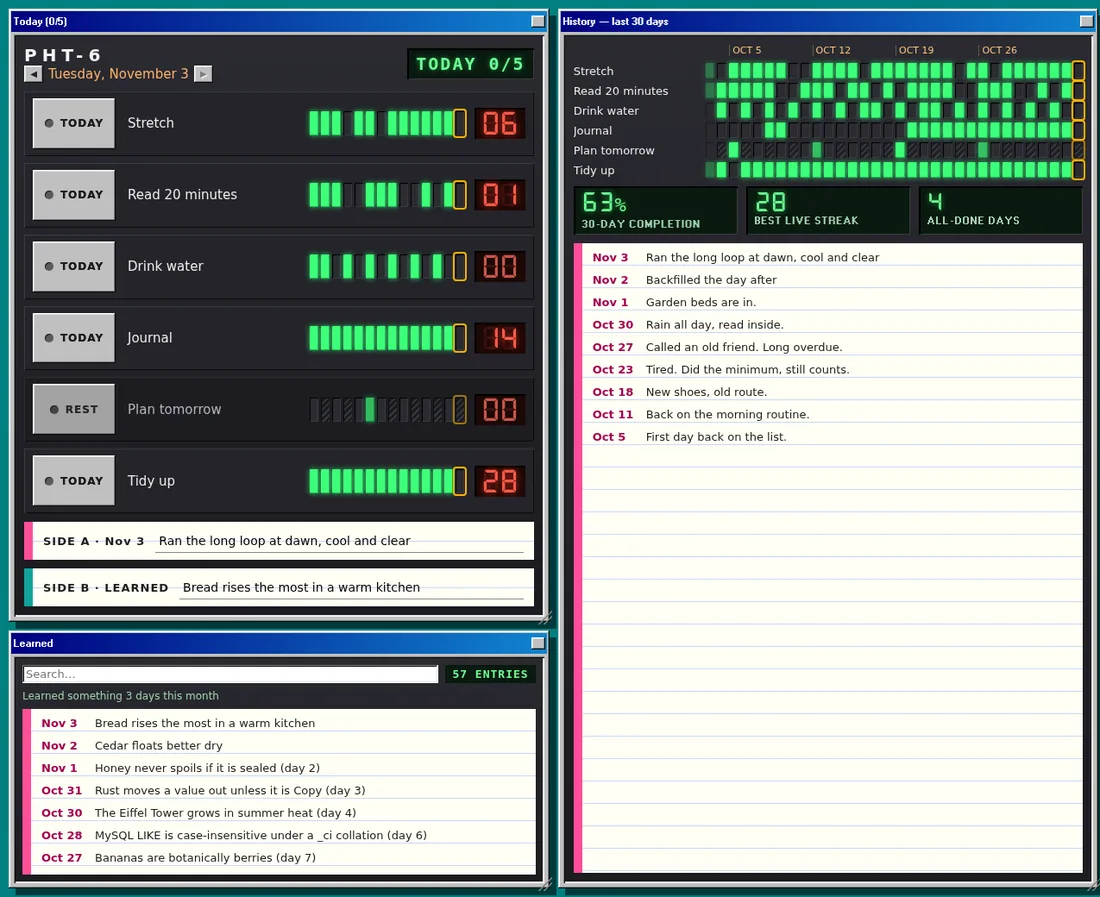
A single-user daily habit tracker: one check per habit per day, an optional one-line note, and streaks that respect rest days. The page is a Windows 98 desktop with snap-grid windows. Underneath the styling it is a small, heavily tested full stack application: a TypeScript API over a storage interface with two implementations, a dependency-free frontend, and versioned releases with rollback.

TypeScript · Node · MySQL · Vitest · no frontend framework

The PHT desktop with three windows in a Windows 98 style. The Today window lists six habits, each with a row of green streak lights and a red counter. The History window shows a 30-day grid per habit and a list of daily notes. The Learned window lists one line per day.
Part of the desktop, showing the synthetic data from the development server.

1.5 · OPERATIONS · AUGUST 2024 TO OCTOBER 2025

Library system

Built and solely administered a production Koha library system at a university design and engineering center between August 2024 and October 2025, serving 200+ users at 99.9% uptime, with custom MySQL triggers, stored procedures and automated workflows; it stayed in production after handover.

2Method

Every change passes through the same six steps.

  1. 2.1Specification. A written statement of scope, constraints and what must not change.
  2. 2.2Reconnaissance. A read-only survey of the existing code before any plan.
  3. 2.3Decision record. Architecture, alternatives and risks, approved before implementation.
  4. 2.4Gated implementation. Discrete checkpoints, each with evidence before the next.
  5. 2.5Independent review. A separate pass for wrong assumptions, edge cases and security defects.
  6. 2.6Accountable sign-off. I review every diff and finding; the plan and decisions stay in the pull request.

3Experience

  1. May 2023 to August 2024Frontend Developer and Accessibility Specialist. Youth ed-tech organization. Recurring summer role, part time.
  2. January 2024 to January 2025Volunteer lead developer. Nonprofit.
  3. August to December 2024Frontend Developer and Accessibility Specialist. University design and engineering center. Part time, remote.
  4. December 2024 to October 2025Accessibility-Driven Full Stack Engineer. The same center. Full time, remote.
  5. May 2026 to presentSoftware Application Development Engineer. Intern, then contract, then full time from October 2026. Remote.